Ethiopian Kiñit ( scales ) Analysis of the formation and structure of the
The aim of this study is to analyze and categorize the different scales (Kiñits), which are found in Ethiopia, because the point has been and is controversial. This study will divide the entire country in to three zones, and will try to analyze their musical structures, and then come up with clear (accurate) ideas about the Ethiopian scale structures. The study finding might resolve some of the controversial points. For the purpose of analysis different representative musical materials are recorded from different areas of the country, and sample materials were selected and analyzed.
Tizita
Tizita is a very commonly used kiñit.1 It has a major as well has a minor version. Although Tizita major is the same as the major pentatonic scale, Tizita minor is not the same as the minor pentatonic scale.
Tizita Major: C – D – E – G – A. This is a major 2nd, major 2nd, minor 3rd, major 2nd, and a minor 3rd.
Tizita Major scale
Tizita Minor: C – D – Eb – G – Ab. This is a major 2nd, minor 2nd, major 3rd, minor 2nd, and a major 3rd.
To get Tizita Minor flatten the 3rd and 5th notes in the scale.
Therefore, Tizita Minor is 1, 2, b3, 4, b5.
Tizita Minor scale
“Tizita” by Nebeyu Tesfaye. Tiizita major and minor are featured in this classic instrumental.
Bati
Bati also has a major and a minor version.2
Bati Major: C – E – F – G – B. This is a major 3rd, minor 2nd, major 2nd, major 3rd, and minor 2nd.
Bati Major scale
Bati Minor: C – Eb – F – G – Bb. This is a major 3rd, major 2nd, major 2nd, minor 3rd, and major 2nd.
To get to Bati minor flatten the 2nd and 5th.
And so, Bati minor is as follows: 1, b2, 3, 4, b5
Bati Minor scale
Other versions of Bati augment the major and minor modes with raised 3rd, 4th, and 5th notes.
Bati (Lydian) with raised 3rd.
Bati Minor with raised 4th.
Bati Major with raised 5th.
“Ye Bati Koyeta”, Samuel Yirga.
“Bati” Instrumental by Yishak Banjaw.
Bati major in F#
Girma Yifrashewa, Sememen. Bati major with raised 5th.
Ambassel
There are two main types of ambassel. The first one is the most widely used, while the second one is not as common.
Ambassel: C – Db – F – G – Ab. This is a minor 2nd, major 3rd, major 2nd, minor 2nd, and major 3rd.
Ambassel
Ambassel type 2: C – D – F – G – A. This is a major 2nd, minor 3rd, major 2nd, major 2nd, and minor 3rd. This scale is known to the rest of the world as the Mixolydian pentatonic scale, which is the 4th mode of the major pentatonic scale.
Ambassel (Mixolydian pentatonic)
Anchihoye
There are several types of anchihoye kiñits used.3 However, there is one that is the most commonly used.
Anchihoye: C – Db – F – Gb – A. This is a minor 2nd, major 3rd, minor 2nd, minor 3rd, and a minor 3rd.
Anchihoye Kiñit
There are also a few other ancihoye kiñits used. The main other three are all modes of the major pentatonic scale.
Mixolydian pentatonic: C – D – F – G – A. This is the scale in the Ambassel section above (Ambassel type 2). Some musicians associate it with Ambassel, while others associate it with Anchihoye.
Yematebela Wofe: C – D – F – G – Bb. This is a major 2nd, minor 3rd, major 2nd, minor 3rd, and a major 2nd. This scale is the same scale that we know of as the Dorian pentatonic scale.
Shegaye: C – Eb – F – Ab – Bb. This is a minor 3rd, major 2nd, minor 3rd, major 2nd, and a major 2nd. This scale is the same scale that we know of as the Phrygian pentatonic scale.
Steve Cropper in 1973. His guitar licks could be heard in hits by Otis Redding, Sam & Dave and Wilson Pickett, among many others.Credit…David Reed Archive/Alamy
As a member of Booker T. & the MG’s and as a producer, he played a pivotal role in the rise of Stax Records, a storied force in R&B in the 1960s and ’70s.
By Bill Friskics-Warren
Steve Cropper, the prodigious guitarist, songwriter and producer who played a pivotal role in shaping the lean gutbucket soul music made at Memphis’s Stax Records in the 1960s and ’70s, died on Wednesday in Nashville. He was 84.
His death, at a rehabilitation facility, was confirmed by his wife, Angel Cropper, who did not specify the cause.
As a member of Booker T. & the MG’s, the house rhythm section at Stax, Mr. Cropper played the snarling Fender Telecaster lick on “Green Onions,” the funky hit instrumental by the MG’s from 1962. He also contributed the ringing guitar figure that opened Sam & Dave’s gospel-steeped “Soul Man,” the 1966 single on which the singer Sam Moore shouted, “Play it, Steve!” to cue Mr. Cropper’s stinging single-string solo on the chorus. Both records were Top 10 pop hits and reached No. 1 on the R&B chart.
Mr. Cropper, second from left, in an undated photo with members of Booker T. and the MG’s: from left, Booker T. Jones, Al Jackson Jr. and Lewie Steinberg.
Mr. Cropper had an innate feel for a groove as well as a penchant for feeling over flash — gifts evident in his bell-toned guitar work on Otis Redding’s “(Sittin’ on) The Dock of the Bay.” In 2015, he was ranked 39th on Rolling Stone’s list of the 100 greatest guitarists of all time. Britain’s Mojo magazine slotted him second, behind only Jimi Hendrix, on a similar list of guitarists published in 1996.
“I’ve always thought of myself as a rhythm player,” Mr. Cropper said in an interview with Guitar.com in 2021. “I get off on the fact that I can play something over and over and over, while other guitar players don’t want to even know about that. They won’t even play the same riff or the same lick twice.”
Mr. Cropper was also a prolific songwriter. His credits, typically as a co-writer, include the epoch-defining likes of “Dock of the Bay,” Wilson Pickett’s “In the Midnight Hour” and Eddie Floyd’s “Knock on Wood.” All three were No. 1 R&B singles. Mr. Redding’s record topped the pop chart as well, and won Grammy Awards for best R&B song and best male R&B vocal performance in 1969.
Dec. 4, 2025
In charge of artists and repertoire at Stax during the 1960s, Mr. Cropper produced the recordings of many of the songs he had a hand in writing. His website states that he was “involved in virtually every record issued by Stax from the fall of 1961 through year end 1970.” Judging by the testimony of the Stax co-founder Jim Stewart, it is not hard to imagine that this was the case.
“Steve was my right-hand man,” Mr. Stewart said of Mr. Cropper’s contributions to the label’s legacy in Peter Guralnick’s 1986 book, “Sweet Soul Music: Rhythm and Blues and the Southern Dream of Freedom.” “He would come to the studio and sit there and keep the doors open and take care of business; he was disciplined and responsible. Steve was the key.”
In the process, Mr. Cropper helped reimagine the Southern soul music of the era, imbuing it with a simultaneously urban and down-home feel — a bluesy mix of sinew and grit that was instantly recognizable over the radio airwaves. Widely sampled, the records he played on or produced influenced subsequent generations of musicians, especially in hip-hop and R&B.
Mr. Cropper achieved further acclaim in the late 1970s for his work with the Blues Brothers, the musical side project of the “Saturday Night Live” co-stars John Belushi and Dan Aykroyd. By then, Stax had closed, having fallen into insolvency in 1975, and Mr. Cropper had begun immersing himself in freelance session and production work with artists like Art Garfunkel and Ringo Starr.
Mr. Cropper performing with John Belushi, left, and Dan Aykroyd at the Palladium in New York City in 1980.Credit…Ebet Roberts/Redferns, via Getty Images
“Briefcase Full of Blues,” the Blues Brothers’ first album, included a remake of “Soul Man,” complete with a reprise of the shout “Play it, Steve!” from Mr. Belushi on the chorus. The single reached No. 14 on the pop chart in 1979, anticipating the release of the 1980 movie “The Blues Brothers,” starring Mr. Belushi and Mr. Aykroyd and featuring Mr. Cropper as Steve “the Colonel” Cropper, who plays in a band called Murph and the Magic Tones. (Born of Mr. Cropper’s tendency to take charge of situations, the Colonel was a childhood nickname that stuck with him even after he established himself as a musician.)
Steven Lee Cropper was born on Oct. 21, 1941, on a farm near Dora, Mo., near the Arkansas border. He was the only child of Hollis and Grace (Atkins) Cropper. His father was a special agent for the St. Louis-San Francisco Railway, and his mother was a schoolteacher.
Steve was exposed to country music early, but was introduced to gospel and rhythm and blues only after moving to Memphis with his parents at age 9. He bought his first guitar, by mail order, at 14.
His earliest musical influences were stylistically diverse, among them the country guitarist Chet Atkins, the jazz guitarist Tal Farlow, the bluesman Jimmy Reed, and Lowman Pauling of the influential R&B quintet the “5” Royales. (In 2011, he paid tribute to Mr. Pauling’s transfixing fretwork with “Dedicated: A Salute to the 5 Royales,” an album featuring singers like Bettye LaVette and Lucinda Williams performing versions of the group’s recordings.)
As a teenager, Mr. Cropper and several schoolmates, including the future MG’s bassist Donald “Duck” Dunn, formed a band called the Royal Spades. After changing their name to the Mar-Keys in 1961, they had a Top 10 pop hit with the slinky instrumental “Last Night.” Mr. Cropper had by that point also done session work in Memphis for Sun Records and Hi Records.
In 1962, while Mr. Cropper and the MG’s were jamming between sessions at Stax, Mr. Stewart, impressed by the riffing, organ-driven blues he heard, surreptitiously captured the quartet’s playing on tape. “Green Onions” was the result.
Booker T. & the MG’s — the organist Booker T. Jones served as the ensemble’s leader — served as the rhythm section at Stax for nine years. Its members also included Al Jackson Jr. on drums and Lewie Steinberg on bass. Mr. Dunn replaced Mr. Steinberg in 1965.
The original MG’s lineup, with both Black and white members (Mr. Cropper was white), helped integrate Stax at a time when the four men would not have been permitted to appear on a public bandstand together in the segregated South.
The MG’s had six Top 40 pop hits for Stax, two of which, “Hang ’Em High” and “Time Is Tight,” were featured on movie soundtracks. Many of their recordings were sampled by hip-hop artists, from Roxanne Shante to Raekwon of the Wu-Tang Clan. According to the website WhoSampled, more than two dozen acts have interpolated into their recordings passages from the MG’s 1971 album, “Melting Pot.”
In 1970, having released two albums of his own (the second was a collaboration with the guitarists Pops Staples and Albert King), Mr. Cropper left Stax in a dispute over how the label’s new co-owner, Al Bell, was managing things. (“Melting Pot” was recorded before his departure.)
After opening his own studio in Memphis, Mr. Cropper moved to Los Angeles in 1975, doing session work for John Lennon and Leon Russell before joining Levon Helm & the RCO All-Stars. From there, he and Mr. Dunn were recruited to play in the Blues Brothers, an affiliation that led to multiple tours and recordings, including appearances in a 1998 movie sequel, “Blues Brothers 2000.”
Booker T. & the MG’s were inducted into the Rock & Roll Hall of Fame in 1992. “Cruisin’,” a track from their 1994 reunion album, “That’s the Way It Should Be,” won a Grammy for best pop instrumental performance.
In the 2000s, Mr. Cropper released the first of the two albums he made with the former Rascals singer Felix Cavaliere and worked on records by the Pixies frontman Frank Black. He was elected to the Songwriters Hall of Fame in 2005. He also appeared in “Stax: Soulsville, U.S.A.,” an acclaimed HBO docuseries in 2024.
Image
Mr. Cropper in 2015 performing at the Torino Jazz Festival in Turin, Italy. He was elected to the Songwriters Hall of Fame in 2005.Credit…Stefano Guidi/Corbis, via Getty Images
Mr. Cropper’s first marriage, to Betty Grooms, ended in divorce. In 1988, he married Angel Hightower. In addition to his wife, he is survived by two children from his first marriage, Stephen and Ashley Cropper; and two children from his second marriage, Cameron Cropper and Andrea Cropper-Register.
Mr. Cropper’s affiliation with the Blues Brothers spanned four decades. But back in 1978, when he and Mr. Dunn first joined the band, skeptics failed to understand why they would want to collaborate with the two comedians from “Saturday Night Live.”
“We got a lot of flak — Duck and I did — about playing with those guys,” Mr. Cropper told Guitar.com. “Folks said, ‘What are you guys doing with these two clowns from S.N.L.?’”
“But those guys were great musicians,” he went on. “John Belushi had played drums in a band for years before he ever went to Second City,” the Chicago improv comedy troupe. “And Ackroyd is actually playing the harmonica on everything we did.”
Ash Wu and Stella Raine Chu contributed reporting and Kirsten Noyes contributed research.
“There’s not a shred of evidence on the internet that this band has ever existed”: This apparently AI-generated artist is racking up hundreds of thousands of Spotify streams
Matt Mullen
There’s nothing behind the eyes(Image credit: Velvet Sundown)
AI-powered music generators Suno and Udio have been churning out soulless slop for almost two years now, but it seems that AI-generated songs have largely failed to capture the public’s imagination in the way that many of the technology’s critics had feared.
A handful of AI-made tracks have broken through to the mainstream: in 2023, a controversial ‘fake Drake’ song with deepfake vocals picked up millions of streams before being taken down, and more recently, an unsavoury AI-generated track made it into Germany’s charts, stirring up tensions for an entirely different reason.
But, on the whole, the top tier of the music industry has yet to be infiltrated by tracks produced by platforms like Suno, which generate complete songs based on text prompts at the click of a button. That’s not to say that AI-generated music isn’t being listened to, however, as a report from Music Ally has made clear.
Though they’re not yet dominating the charts, disturbingly realistic AI songs are slowly but surely creeping into our headphones – and you may even be listening to them without realizing what you’re hearing. Smuggled into popular playlists and hidden in plain sight among authentic, well-known tracks, AI-generated artists with fake photos, ChatGPT-generated biographies and no genuine fans to speak of are picking up hundreds of thousands of streams.
One such artist is The Velvet Sundown, a band with almost 350,000 monthly Spotify listeners but no discernible online presence or social media accounts. (“There’s not a shred of evidence on the internet that this band has ever existed,” as one Redditor put it.) While we can’t confirm that the band’s music is AI-generated, a glance at their artist image and bio should be enough to persuade even the least skeptical observer.
“The Velvet Sundown don’t just play music — they conjure worlds,” reads the group’s Spotify profile, which we’re about 99% certain has been authored by ChatGPT. “Somewhere between the ghost of Laurel Canyon and the echo of a Berlin warehouse, this four-piece band bends time, fusing 1970s psychedelic textures with cinematic alt-pop and dreamy analog soul.”
The biography tellingly states that the band’s music “feels like a hallucination you want to stay lost in,” their live shows playing like “lucid dreams” and their albums “unfolding like lost soundtracks to films that were never made”. There’s even a seemingly bogus quote from Billboard rounding things off, claiming that the band “sound like the memory of something you never lived, and somehow make it feel real”.
The band’s line-up ostensibly features “mellotron sorcerer” Gabe Farrow, “free-spirited percussionist” Orion “Rio” Del Mar, “synth alchemist” Milo Rains and guitarist Lennie West, four musicians that turn up a grand total of zero appearances in Google search results between them.
As for the music itself, the band’s country-tinged roots-rock bears the unmistakably lo-fi veneer of a Suno creation, but is convincing enough to pass by undetected if sandwiched in a playlist between two authentic songs. In fact, that’s exactly where it’s been found.
Velvet Sundown tracks have been identified in more than 30 popular playlists created by anonymous curator accounts, and have even begun popping up in Spotify users’ Discover Weekly, personalized playlists generated by the platform’s recommendation algorithm. The band’s music has also been uploaded to Apple Music, Amazon Music, YouTube and Deezer, the latter’s AI detection tool flagging The Velvet Sundown’s music as potentially AI-generated.
Who is behind The Velvet Sundown, and how has the music made its way into playlists themed around TV soundtracks and Vietnam War-era artists, saved by more than half a million listeners?
The answer to both of these questions remains a mystery, but the band’s growing popularity confirms that of the thousands of AI-generated tracks uploaded to streaming services each day, many are gaining a foothold – and with it, taking money out of the pockets of authentic artists making real music.
Irish music and dance are deeply intertwined, each enriching the other in a vibrant cultural expression. From traditional jigs and reels to contemporary performances, this connection forms a cornerstone of Irish cultural identity. This article explores how Irish music and dance complement each other, highlighting their historical relationship, shared rhythms, and the impact of this synergy on Irish culture.
Historical Roots
The relationship between Irish music and dance dates back centuries. Traditional Irish music, characterized by lively tunes and distinctive rhythms, was often performed to accompany dance. Historically, music and dance were central to community gatherings and celebrations, such as fairs and festivals. The lively nature of Irish music, with its upbeat tempos and rhythmic patterns, provided the perfect backdrop for traditional dances, fostering a sense of communal joy and connection.
Shared Rhythms and Styles
Irish music and dance share common rhythms and styles that enhance their connection. The music often features repetitive, upbeat patterns that drive the tempo of the dance. Common dance forms, such as the jig, reel, and hornpipe, are characterized by specific rhythmic structures that align closely with musical phrases. For example, the 4/4 time signature of a reel matches the energetic steps of a traditional reel dance, creating a seamless flow between the music and the dance. This rhythmic synergy allows dancers to interpret and respond to the music in real-time, resulting in dynamic and expressive performances.
Traditional Irish Dance Forms
Several traditional Irish dance forms closely link with specific types of music. For example, dancers perform the lively jig to fast-paced tunes in 6/8 time. The reel, characterized by rapid footwork and energetic movements, follows a straightforward rhythm in 4/4 time. The hornpipe, known for its distinctive rhythm and slower tempo, often showcases more elaborate footwork. Each dance form reflects the rich diversity of Irish music and dance traditions through its unique style and rhythm.
The Role of Music in Dance Performance
Music plays a crucial role in Irish dance performances, providing both the rhythm and mood for the dancers. Traditional Irish dance, including both solo and group performances, relies on live music to create an authentic experience. Musicians and dancers often collaborate closely, with musicians adjusting their tempo and dynamics to match the dancers’ movements. This live interaction enhances the performance, creating a dynamic and engaging experience for both performers and audiences.
Contemporary Influences
In the contemporary era, the connection between Irish music and dance has continued to evolve. Twenty years ago productions, such as “Riverdance” and “Lord of the Dance,” brought Irish dance to international prominence, showcasing the dynamic relationship between music and movement. These performances blended some traditional Irish elements with innovative choreography and music, highlighting the adaptability and global appeal of Irish cultural expressions. The success of these productions introduced Irish music and dance to new audiences, further strengthening their global connection.
Educational and Cultural Impact
Education and cultural preservation efforts play a significant role in maintaining the connection between Irish music and dance. Institutions and organizations, such as Comhaltas Ceoltóirí Éireann and The Royal Irish Academy of Music, and Tew’s Irish Dance Adacemy provide opportunities for individuals to learn and practice both music and dance. Festivals, workshops, and competitions celebrate and promote Irish music and dance, fostering a sense of community and cultural pride. These initiatives ensure that the traditional connection between music and dance continues to thrive and inspire future generations.
Conclusion
The connection between Irish music and dance is a testament to the rich cultural heritage of Ireland. Through shared rhythms, traditional dance forms, and contemporary innovations, Irish music and dance complement each other in a vibrant cultural expression. This synergy continues to captivate audiences around the world, celebrating Ireland’s unique musical and dance traditions and ensuring their enduring legacy. Locally here in Clear Lake Texas we have an amazing dance instructor Richard Tew who’s school openly embodies all of these interconnected disciplines.
Maqam Şehnaz is a mode in Ottoman classical music, which is also known as maqam music, after the term used for mode in this tradition (maqam).
While homophonic performance has remained an essential part of its aesthetic to this day, maqam music started incorporating tertian harmony at some point in the 18th century, and the process was complete by the 1850s. This transformed the harmonic structure of the traditional modes to a significant degree, so that even the still bare, unaccompanied melody, now effectively implies tonality, chord progressions, cadences, and resolves melodic ideas (sentences) logically within the timeframe provided by rhythm and form.
The resulting harmonic structure is unmistakably tertian, yet it is heterodox with respect to traditional tonality, often breaking the strict rules of functional harmony. It is shared with maqam-influenced musical styles of the Balkans and Eastern Europe, such as klezmer music, the only difference being that in these modern idioms it is explicated by virtue of chords and bass lines. By inferring rules for harmonic development from the various polyphonic practices in these styles, it is possible to detect the trail left by the modern maqam melody to reveal a very intricate and dynamic harmonic canopy.
Şehnaz Saz Semaisi by Kemençeci Nikolaki
This late 19th or early 20th-century composition is an instrumental concert piece in the saz semai form, written in the aksak semai rhythm (10/8, notated in the score below as 5/8). The Şehnaz mode uses A double harmonic major as its primary scale:
A Bb C# D E F G# A
However, the mode exhibits a complex melodic development outline, starting above the octave with A harmonic minor.
E F G# A BC D E
Bars 1-4 (1. hane)
The first four bars (of 10/8) of the piece make up the first hane (one of the four non-repeating parts). They effectively conclude a typical A harmonic minor progression using the V-i cadence, albeit with the melody landing on the fifth degree (E).
Bars 5-6 (teslim)
The teslim (refrain, repeating part) then immediately modulates to the key of D, at first implying D major. Then, a surprising development in the second bar (of 10/8) of the refrain: the fifth degree in the key of D major, the Mixolydian finalis(A) is tonicized using a secondary dominant (E7) for the complete Gm-E7-A cadence. To understand where this solution is coming from in this modal context, one important aspect of maqam music must be considered, and that is its unique tone system, which accommodates neutral intervals. These are neither major nor minor, and the thirds formed with them, being exactly in between major and minor thirds, are unusable within a tonal framework. One popular melodic structure provided for by this tone system is a type of tetrachord (4-note sequence) with a neutral second degree (e.g., between F and F# in the score below, which doesn’t use a unique symbol for it like F+). Since the D-F+ neutral third makes for an unusable chord on D, Serbian and Bosnian musicians have found an ingenious solution to harmonizing this tetrachord which doesn’t even need to undermine its traditional intonation:
They treat it as a sequence of four notes (5-6-7-8) on the fifth of the Mixolydian scale.
Since the neutral second interval here (F+) is a neutral sixth of the implied Mixolydian tonic (A), it snuggly fits into the tonic’s harmonic embrace as its natural 13th, which is about a quartertone flat of the F# in equal temperament. Moreover, due to the principle of enharmonic equivalence between acoustically similar intervals, it even fits into an extended chord on the dominant (E7), being roughly equivalent to a pure major third of the dominant chord’s natural minor 7th.
Whether the neutral second is tempered or not, it is a key part of the history that led to the development of this unique harmonic solution.
Bars 7-8 (teslim)
After this momentary tonicization of A Mixolydian with a finalis on its V, the refrain now returns to the A double harmonic scale with the harmonic tetrachord on A, though the upper part changes to A Phrygian dominant. The harmonic backdrop for such a melodic movement is D harmonic minor V, where the half-cadence Gm-A with respect to the D minor tonic resolves the melodic movement, which has its finalis on A.
Note that the unusual key signature, which implies D harmonic minor,features both the flat Bb and the sharp C# as the leading tone. This is due to minor tonality as such not being a recognized entity in the theoretical system of this modal music tradition, wherefore subordinating the scalar structure A Bb C# D E F G(#) A… to the scale of F major would not make sense.
While some Western audiences might perceive this cadence as unresolved, this is the standard way that melodies implying harmonic minor V are harmonized—the internationally famous example being Hava nagila—and they feel perfectly resolved to the Balkanic, Middle Eastern and Eastern European audiences.
Resolved half-cadences are an important innovation of Eastern tertian harmony.
Bars 9-10 (2. hane)
Now the same principle of Mixolydian V tonicization described above is used in the beginning of the second hane to modulate to the key of G major (b7), which allows for a harmonization of the A B C D tetrachord, with a neutral second heard between A and B in practice. Now the finalis of Mixolydian in G (D) becomes the implied tonic as the melody rests on A, being tonicized with the same II-V suspended cadence in the key of G: (Cm)-A7-D.
Bars 11-12 (2. hane) & Final Remarks
In the conclusion of the second hane starting from bar 11, the melody reverts to the A double harmonic major scale, heard in full in a single melodic phrase for the first time in the piece. It straddles the line between two tonalities: D Gypsy minor V (D harmonic minor with a #4 and a finalis on V = A) and A harmonic minor IV (b2 #3), since these are the two tonalities that accommodate the two harmonic tetrachords and lend the chords for cadences.
Bar 11 ends with a suspension on the implied tonic of D Gypsy minor (or A harmonic minor IV). Then, bar 12 goes back to the tonicized Mixolydian finalis A in the key of D major, ending in the E7-A cadence.
In only 12 bars, this piece of music from an originally purely homophonic tradition without tertian harmony outlines a very complex harmonic progression with its melody, which moves quickly yet gracefully through three implied keys, using tonal devices like cadences to logically conclude melodic sentences. It makes use of harmonic devices unique to Eastern music, such as the resolved half cadence in harmonic minor V and the tonicized Mixolydian finalis ending in an authentic cadence using the secondary dominant of the key. Such harmony is also able to accommodate neutral melodic intervals alien to Western music in a simple yet ingenious manner, by distancing the implied tonic from the modal finalis.
a neuroscientist leading a new study of musical therapy Leigh Riby Professor of Cognitive-Neuroscience , Department of Psychology, Northumbria University, Newcastle
When I hear Shania Twain’s You’re Still The One, it takes me back to when I was 15, playing on my Dad’s PC. I was tidying up the mess after he had tried to [take his own life]. He’d been listening to her album, and I played it as I tidied up. Whenever I hear the song, I’m taken back – the sadness and anger comes flooding back.
There is a renewed fascination with the healing powers of music. This resurgence can primarily be attributed to recent breakthroughs in neuroscientific research, which have substantiated music’s therapeutic properties such as emotional regulation and brain re-engagement. This has led to a growing integration of music therapy with conventional mental health treatments.
As both a longtime music fan and neuroscientist, I believe music has a special status among all the arts in terms of the breadth and depth of its impact on people. One critical aspect is its powers of autobiographical memory retrieval – encouraging often highly personal recollections of past experiences. We can all recount an instance where a tune transports us back in time, rekindling recollections and often imbuing them with a range of powerful emotions.
But enhanced recollection can also occur in dementia patients, for whom the transformative impact of music therapy sometimes opens a floodgate of memories – from cherished childhood experiences and the aromas and tastes of a mother’s kitchen, to lazy summer afternoons spent with family or the atmosphere and energy of a music festival.
One remarkable example is a widely shared video made by the Asociación Música para Despertar, which is thought to feature the Spanish-Cuban ballerina Martha González Saldaña (though there has been some controversy about her identity). The music of Swan Lake by Tchaikovsky appears to reactivate cherished memories and even motor responses in this former prima ballerina, who is moved to rehearse some of her former dance motions on camera.
Tchaikovsky’s Swan Lake appears to reactivate long-unused motor responses in this former ballerina.
In our laboratory at Northumbria University, we aim to harness these recent neuroscience advances to deepen our understanding of the intricate connection between music, the brain and mental wellbeing. We want to answer specific questions such as why sad or bittersweet music plays a unique therapeutic role for some people, and which parts of the brain it “touches” compared with happier compositions.
Advanced research tools such as high-density electroencephalogram (EEG) monitors enable us to record how the brain regions “talk” to each other in real-time as someone listens to a song or symphony. These regions are stimulated by different aspects of the music, from its emotional content to its melodic structure, its lyrics to its rhythmic patterns.
Of course, everyone’s response to music is deeply personal, so our research also necessitates getting our study participants to describe how a particular piece of music makes them feel – including its ability to encourage profound introspection and evoke meaningful memories.
Ludwig van Beethoven once proclaimed: “Music is the one incorporeal entrance into the higher world of knowledge which comprehends mankind, but which mankind cannot comprehend.” With the help of neuroscience, we hope to help change that.
A brief history of music therapy
Music’s ancient origins predate aspects of language and rational thinking. Its roots can be traced back to the Paleolithic Era more than 10,000 years ago, when early humans used it for communication and emotional expression. Archaeological finds include ancient bone flutes and percussion instruments made from bones and stones, as well as markings noting the most accoustically resonant place within a cave and even paintings depicting musical gatherings.
Music in the subsequent Neolithic Era went through significant development within permanent settlements across the world. Excavations have revealed various musical instruments including harps and complex percussion instruments, highlighting music’s growing importance in religious ceremonies and social gatherings during this period – alongside the emergence of rudimentary forms of music notation, evident in clay tablets from ancient Mesopotamia in western Asia.
Ancient Greek philosophers Plato and Aristotle both recognised music’s central role in the human experience. Plato outlined the power of music as a pleasurable and healing stimulus, stating: “Music is a moral law. It gives soul to the universe, wings to the mind, flight to the imagination.” More practically, Aristotle suggested that: “Music has the power of forming the character, and should therefore be introduced into the education of the young.”
Throughout history, many cultures have embraced the healing powers of music. Ancient Egyptians incorporated music into their religious ceremonies, considering it a therapeutic force. Native American tribes, such as the Navajo, used music and dance in their healing rituals, relying on drumming and chanting to promote physical and spiritual wellbeing. In traditional Chinese medicine, specific musical tones and rhythms were believed to balance the body’s energy (qi) and enhance health.
During the Middle Ages and the Renaissance, the Christian church was pivotal in popularising “music for the masses”. Congregational hymn singing allowed worshippers to engage in communal music during church services. This shared musical expression was a powerful medium for religious devotion and teaching, bridging the gap for a largely non-literate population to connect with their faith through melody and lyrics. Communal singing is not only a cultural and religious tradition, but it has also been recognised as a therapeutic experience.
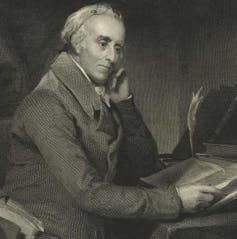
In the 18th and 19th centuries, early investigations into the human nervous system paralleled the emergence of music therapy as a field of study. Pioneers such as American physician Benjamin Rush, a signatory of the US Declaration of Independence in 1776, recognised the therapeutic potential of music to improve mental health.
Soon afterwards, figures such as Samuel Mathews (one of Rush’s students) began conducting experiments exploring music’s effects on the nervous system, laying the foundation for modern music therapy. This early work provided the springboard for E. Thayer Gaston, known as the “father of music therapy”, to promote it as a legitimate discipline in the US. These developments inspired similar endeavours in the UK, where Mary Priestley made significant contributions to the development of music therapy as a respected field.
The insights gained from these early explorations have continued to influence psychologists and neuroscientists ever since – including the late, great neurologist and best-selling author Oliver Sacks, who observed that:
Music can lift us out of depression or move us to tears. It is a remedy, a tonic, orange juice for the ear.
The ‘Mozart effect’
Music was my profession, but it was also a special and deeply personal pursuit … Most importantly, it gave me a way to cope with life’s challenges, learning to channel my feelings and express them safely. Music taught me how to take my thoughts, both the pleasant and the painful ones, and turn them into something beautiful.
Studying and understanding all the brain mechanisms involved in listening to music, and its effects, requires more than just neuroscientists. Our diverse team includes music experts such as Dimana Kardzhieva (quoted above), who started playing the piano aged five and went on to study at the National School of Music in Sofia, Bulgaria. Now a cognitive psychologist, her combined understanding of music and cognitive processes helps us delve into the complex mechanisms through which music affects (and soothes) our minds. A neuroscientist alone might fall short in this endeavour.
The starting point of our research was the so-called “Mozart effect” – the suggestion that exposure to intricate musical compositions, especially classical pieces, stimulates brain activity and ultimately enhances cognitive abilities. While there have been subsequent mixed findings as to whether the Mozart effect is real, due to the different methods employed by researchers over the years, this work has nonetheless triggered significant advances in our understanding of music’s effect on the brain.
Listening to Mozart’s Sonata for Two Pianos in D was found in one study to enhance cognitive abilities.
In the original 1993 study by Frances Rauscher and colleagues, participants experienced enhancement in spatial reasoning ability after just ten minutes of listening to Mozart’s Sonata for Two Pianos in D.
In our 1997 study, which used Beethoven’s second symphony and rock guitarist Steve Vai’s instrumental track For the Love of God, we found similar direct effects in our listeners – as measured both by EEG activity associated with attention levels and the release of the hormone dopamine (the brain’s messenger for feelings of joy, satisfaction and the reinforcement of specific actions). Our research found that classical music in particular enhances attention to how we process the world around us, regardless of one’s musical expertise or preferences.
The beauty of EEG methodology lies in its capacity to track brain processes with millisecond accuracy – allowing us to distinguish unconscious neural responses from conscious ones. When we repeatedly showed simple shapes to a person, we found that classical music sped up their early (pre-300 millisecond) processing of these stimuli. Other music did not have the same effect – and nor did our subjects’ prior knowledge of, or liking for, classical music. For example, both professional rock and classical musicians who took part in our study improved their automatic, unconscious cognitive processes while listening to classical music.
But we also found indirect effects related to arousal. When people immerse themselves in the music they personally enjoy, they experience a dramatic shift in their alertness and mood. This phenomenon shares similarities with the increased cognitive performance often linked to other enjoyable experiences.
Vivaldi’s Four Seasons in full.
In a further study, we explored the particular influence of “program music” – the term for instrumental music that “carries some extramusical meaning”, and which is said to possess a remarkable ability to engage memory, imagination and self-reflection. When our participants listened to Antonio Vivaldi’s Four Seasons, they reported experiencing a vivid representation of the changing seasons through the music – including those who were unfamiliar with these concertos. Our study concluded, for example, that:
Spring – particularly the well-recognised, vibrant, emotive and uplifting first movement – had the ability to enhance mental alertness and brain measures of attention and memory.
What’s going on inside our brain?
Music’s emotional and therapeutic qualities are highly related to the release of neurochemicals. A number of these are associated with happiness, including oxytocin, serotonin and endorphins. However, dopamine is central to the enhancing properties of music.
It triggers the release of dopamine in regions of the brain devoted to reward and pleasure, generating sensations of joy and euphoria akin to the impact of other pleasurable activities such as eating or having sex. But unlike these activities, which have clear value related to survival and reproduction, the evolutionary advantage of music is less obvious.
Its strong social function is acknowledged as the main factor behind music’s development and preservation in human communities. So, this protective quality may explain why it taps into the same neural mechanisms as other pleasurable activities.
The brain’s reward system consists of interconnected regions, with the nucleus accumbens serving as its powerhouse. It is situated deep within the subcortical region, and its location hints at its significant involvement in emotion processing, given its proximity to other key regions related to this.When we engage with music, whether playing or listening, the nucleus accumbens responds to its pleasurable aspects by triggering the release of dopamine. This process, known as the dopamine reward pathway, is critical for experiencing and reinforcing positive emotions such as the feelings of happiness, joy or excitement that music can bring.
We are still learning about the full impact of music on different parts of the brain, as Jonathan Smallwood, professor of psychology at Queen’s University, Ontario, explains:
Music can be complicated to understand from a neuroscience perspective. A piece of music encompasses many domains that are typically studied in isolation – such as auditory function, emotion, language and meaning.
That said, we can see how music’s effect on the brain extends beyond mere pleasure. The amygdala, a region of the brain renowned for its involvement in emotion, generates and regulates emotional responses to music, from the heartwarming nostalgia of a familiar melody to the exhilarating excitement of a crescendoing symphony or the spine-tingling fear of an eerie, haunting tune.
Research has also demonstrated that, when stimulated by music, these regions can encourage us to have autobiographical memories that elicit positive self-reflection that makes us feel better – as we saw in the video of former ballerina Martha González Saldaña.
Our own research points to the hippocampus, crucial for memory formation, as the part of the brain that stores music-related memories and associations. Simultaneously, the prefrontal cortex, responsible for higher cognitive functions, closely collaborates with the hippocampus to retrieve these musical memories and assess their autobiographical significance. During music listening, this interplay between the brain’s memory and emotion centres creates a powerful and unique experience, elevating music to a distinctive and pleasurable stimulus.Visual art, like paintings and sculptures, lacks music’s temporal and multisensory engagement, diminishing its ability to form strong, lasting emotional-memory connections. Art may evoke emotions and memories but often remains rooted in the moment. Music – perhaps uniquely – forms enduring, emotionally charged memories that can be summoned with the replaying of a particular song years later.
Personal perspectives
Music therapy can change people’s lives in profound ways. We have had the privilege of hearing many personal stories and reflections from our study participants, and even our researchers. In some cases, such as the memories of a father’s attempted suicide elicited by Shania Twain’s You’re Still The One, these are profound and deeply personal accounts. They show us the power of music to help regulate emotions, even when the memories it triggers are negative and painful.
In the face of severe physical and emotional challenges, another participant in our study explained how they had felt an unexpected boost to their wellbeing from listening to a favourite track from their past – despite the apparently negative content of the song’s title and lyrics:
Exercise has been crucial for me post-stroke. In the midst of my rehab workout, feeling low and in pain, an old favourite, What Have I Done To Deserve This? by the Pet Shop Boys, gave me an instant boost. It not only lifted my spirits but sent my heart racing with excitement – I could feel the tingles of motivation coursing through my veins.
The Pet Shop Boys gave added motivation to a post-stroke rehab workout.
Music can serve as a cathartic outlet, a source of empowerment, allowing individuals to process and cope with their emotions while supplying solace and release. One participant described how a little-known tune from 1983 serves as a deliberate mood inducer – a tool to boost their wellbeing:
Whenever I’m down or in need of a pick me up, I play Dolce Vita by Ryan Paris. It is like a magic button for generating positive emotions within myself – it always lifts me up in a matter of moments.
As each person has their own tastes and emotional connections with certain types of music, a personalised approach is essential when designing music therapy interventions, to ensure they resonate with individuals deeply. Even personal accounts from our researchers, such as this from Sam Fenwick, have proved fruitful in generating hypotheses for experimental work:
If I had to pick a single song that really strikes a chord, it would be Alpenglow by Nightwish. This song gives me shivers. I can’t help but sing along and every time I do, it brings tears to my eyes. When life is good, it triggers feelings of inner strength and reminds me of nature’s beauty. When I feel low, it instils a sense of longing and loneliness, like I am trying to conquer my problems all alone when I could really use some support.
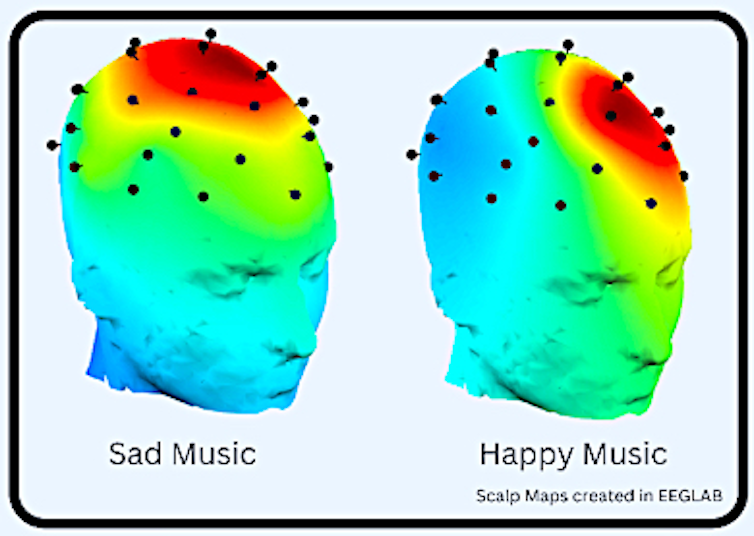
Stimulated by such observations, our latest investigation compares the effects of sad and happy music on people and their brains, in order to better understand the nature of these different emotional experiences. We have found that sombre melodies can have particular therapeutic effects, offering listeners a special platform for emotional release and meaningful introspection.
Exploring the effects of happy and sad music
Drawing inspiration from studies on emotionally intense cinematic experiences, we recently published a study highlighting the effects of complex musical compositions, particularly Vivaldi’s Four Seasons, on dopamine responses and emotional states. This was designed to help us understand how happy and sad music affects people in different ways.
EEG data comparing the effects of listening to sad and happy music.Leigh Riby, Author provided (no reuse)
One major challenge was how to measure our participants’ dopamine levels non-invasively. Traditional functional brain imaging has been a common tool to track dopamine in response to music – for example, positron emission tomography (PET) imaging. However, this involves the injection of a radiotracer into the bloodstream, which attaches to dopamine receptors in the brain. Such a process also has limitations in terms of cost and availability.
In the field of psychology and dopamine research, one alternative, non-invasive approach involves studying how often people blink, and how the rate of blinking varies when different music is played.
Blinking is controlled by the basal ganglia, a brain region that regulates dopamine. Dopamine dysregulation in conditions such as Parkinson’s disease can affect the regular blink rate. Studies have found that individuals with Parkinson’s often exhibit reduced blink rates or increased variability in blink rates, compared with healthy individuals. These findings suggest that blink rate can serve as an indirect proxy indicator of dopamine release or impairment.
While blink rate may not provide the same level of precision as direct neurochemical measurements, it offers a practical and accessible proxy measure that can complement traditional imaging techniques. This alternative approach has shown promise in enhancing our understanding of dopamine’s role in various cognitive and behavioural processes.
Our study revealed that the sombre Winter movement elicited a particularly strong dopamine response, challenging our preconceived notions and shedding light on the interplay between music and emotions. Arguably you could have predicted a heightened response to the familiar and uplifting Spring concerto, but this was not the case.
Vivaldi’s Winter movement was found to elicit a particularly strong dopamine response.
Our approach extended beyond dopamine measurement to gain a comprehensive understanding of the effects of sad and happy music. We also used EEG network analysis to study how different regions of the brain communicate and synchronise their activity while listening to different music. For instance, regions associated with the appreciation of music, the triggering of positive emotions and the retrieval of rich personal memories may “talk” to each other. It is like watching a symphony of brain activity unfold, as individuals subjectively experienced a diverse range of musical stimuli.
In parallel, self-reports of subjective experiences gave us insights into the personal impact of each piece of music, including the timeframe of thoughts (past, present, or future), their focus (self or others), their form (images or words), and their emotional content. Categorising these thoughts and emotions, and analysing their correlation with brain data, can provide valuable information for future therapeutic interventions.
Our preliminary data reveals that happy music sparks present and future-oriented thoughts, positive emotions, and an outward focus on others. These thoughts were associated with heightened frontal brain activity and reduced posterior brain activity. In contrast, sad tunes caused self-focused reflection on past events, aligning with increased neural activity in brain areas tied to introspection and memory retrieval.
So why does sad music have the power to impact psychological wellbeing? The immersive experience of sombre melodies provides a platform for emotional release and processing. By evoking deep emotions, sad music allows listeners to find solace, introspect, and effectively navigate their emotional states.
This understanding forms the basis for developing future targeted music therapy interventions that cater to people facing difficulties with emotional regulation, rumination and even depression. In other words, even sad music can be a tool for personal growth and reflection.
What music therapy can offer in the future
While not a panacea, music listening offers substantial therapeutic effects, potentially leading to increased adoption of music therapy sessions alongside traditional talk therapy. Integrating technology into music therapy, notably through emerging app-based services, is poised to transform how people access personalised, on-demand therapeutic music interventions, providing a convenient and effective avenue for self-improvement and wellbeing.
And looking even further ahead, artificial intelligence (AI) integration holds the potential to revolutionise music therapy. AI can dynamically adapt therapy interventions based on a person’s evolving emotional responses. Imagine a therapy session that uses AI to select and adjust music in real-time, precisely tailored to the patient’s emotional needs, creating a highly personalised and effective therapeutic experience. These innovations are poised to reshape the field of music therapy, unlocking its full therapeutic potential.
Neurofeedback technology could create individual ‘music-brain maps’ that aid self-therapy.Vu Hoang/Wikimedia, CC BY-SA
In addition, an emerging technology called neurofeedback has shown promise. Neurofeedback involves observing a person’s EEG in real-time and teaching them how to regulate and improve their neural patterns. Combining this technology with music therapy could enable people to “map” the musical characteristics that are most beneficial for them, and thus understand how best to help themselves.
In each music therapy session, learning occurs while participants get feedback regarding the status of their brain activity. Optimal brain activity associated with wellbeing and also specific musical qualities – such as a piece’s rhythm, tempo or melody – is learned over time. This innovative approach is being developed in our lab and elsewhere.
As with any form of therapy, recognising the limitations and individual differences is paramount. However, there are compelling reasons to believe music therapy can lead to new breakthroughs. Recent strides in research methodologies, driven partly by our lab’s contributions, have significantly deepened our understanding of how music can facilitate healing.
We are beginning to identify two core elements: emotional regulation, and the powerful link to personal autobiographical memories. Our ongoing research is concentrated on unravelling the intricate interactions between these essential elements and the specific brain regions responsible for the observed effects.
Of course, the impact of music therapy extends beyond these new developments in the neurosciences. The sheer pleasure of listening to music, the emotional connection it fosters, and the comfort it provides are qualities that go beyond what can be solely measured by scientific methods. Music deeply influences our basic emotions and experiences, transcending scientific measurement. It speaks to the core of our human experience, offering impacts that cannot easily be defined or documented.
Or, as one of our study participants so perfectly put it:
Music is like that reliable friend who never lets me down. When I’m low, it lifts me up with its sweet melody. In chaos, it calms with a soothing rhythm. It’s not just in my head; it’s a soul-stirring [magic]. Music has no boundaries – one day it will effortlessly pick me up from the bottom, and the next it can enhance every single moment of the activity I’m engaged in.
L.A. confidential: The untold stories behind some of the greatest songs of the 1970s and beyond
Linda Ronstadt and Waddy Wachtel performing in 1977.
(Tom Sweeney/Star Tribune via Getty Images)
ByErin Osmon
About 50 years ago, a quartet of L.A. session musicians became so synonymous with the era-defining soft-rock scene — headlined by James Taylor, Carole King, Jackson Browne, Linda Ronstadt, Crosby, Stills & Nash and Fleetwood Mac among others — that they were dubbed the Mellow Mafia.
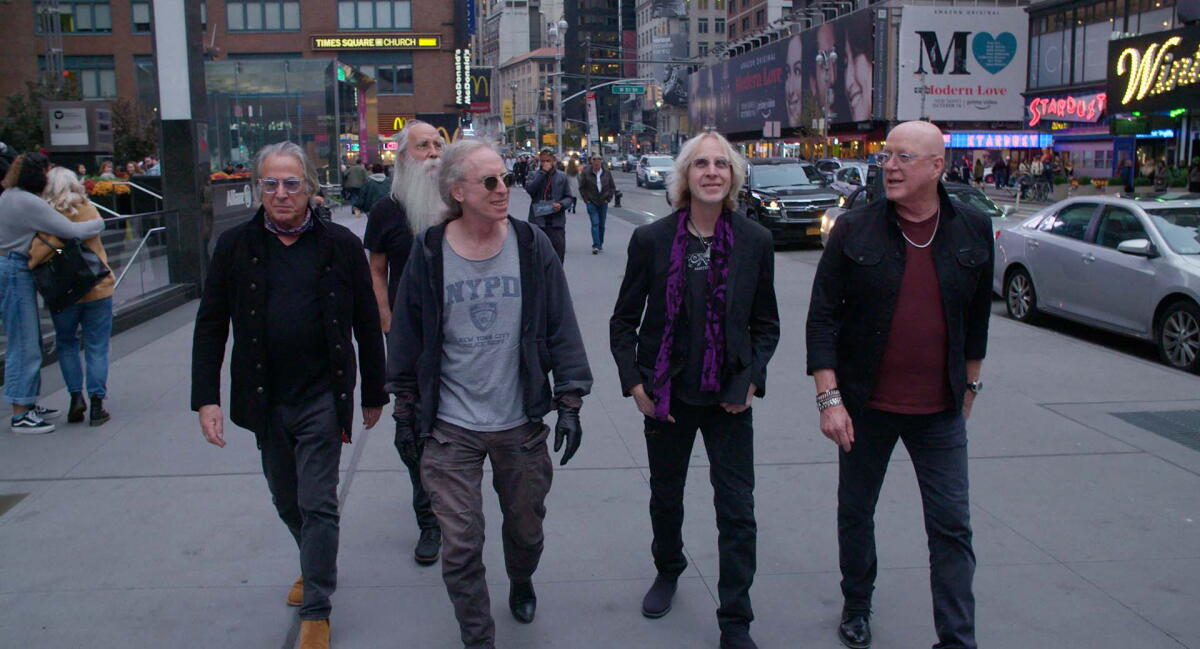
Danny Kortchmar (guitar), Russ Kunkel (drums), Leland Sklar (bass) and Waddy Wachtel (guitar) made their way to Los Angeles through various sliding doors. By the early ’70s, they frequented the same studios, worked with the same engineers and played the same sessions. Championed by the English producer Peter Asher, the four became in-demand separately and in different configurations for their technical capabilities, inventiveness and gift for bringing live sound to the studio.
In 1971, Kortchmar and Kunkel appeared on King’s bestselling, Grammy-winning “Tapestry” and were joined by Sklar on Taylor’s “Mud Slide Slim and the Blue Horizon.” Two years later, Wachtel played on Stevie Nicks and Lindsey Buckingham’s debut, “Buckingham Nicks,” and Wachtel and Kunkel helped shape Nicks’ 1981 solo debut, “Bella Donna.” All four have joined Ronstadt, Browne and Taylor on tour. And that’s just the tip of the iceberg: Individually and together, they’ve appeared on about 5,000 albums.
A new documentary about the group, “The Immediate Family,” will premiere Tuesday at Laemmle NoHo and debut in theaters and on streaming platforms Friday. Directed by Denny Tedesco (who made “The Wrecking Crew!,” about an earlier generation of renowned session musicians), the film chronicles the foursome’s decades-long work with musical icons through original interviews and archival footage. It’s named after the group’s current band with fifth member Steve Postell, which is set to release a new album, “Skin in the Game,” in February.
“We’ve been around such amazing people for so long that we’re sort of used to the attention, observing it and being a part of it,” Sklar explains of the film. “But seeing the movie is sort of a strange reality. We realize, ‘Oh my God, this is actually just about us. Wild.’ ”
On a Zoom call from their homes in Los Angeles and a hotel room in Phoenix (Wachtel is on tour with Nicks), the four musicians gathered to tell the stories of 13 of their classic tracks.
Danny Kortchmar, left, Leland Sklar, background, Waddy Wachtel, Steve Postell and Russ Kunkel star in “The Immediate Family” documentary.
(Magnolia Pictures)
1. James Taylor, “Country Road” (1971)
“I was one of the first people who heard it; he played it for me on acoustic guitar,” Kortchmar says. The pair spent summers together on Martha’s Vineyard as teenagers and Kortchmar — known as Kootch among musicians — says the Taylor classic echoes that time: walking country roads, and hitchhiking to beaches or parties. Kunkel adds that Taylor has a unique guitar style. “He kind of plays the bass part with his thumb. That song, the way he phrased it, made me… play the way his guitar was moving, so there was no conflict, no flaming.”
2. Carole King, “I Feel the Earth Move” (1971)
Carole King, James Taylor and Danny Kortchmar perform onstage.
(Magnolia Pictures)
During the making of “Tapestry,” King and Kortchmar were neighbors in Laurel Canyon, and they rehearsed the songs at her house. This preparation made the sessions move quickly. They used lead sheets instead of fully written-out arrangements, and played everything live. “The [guitar] solo on it was played off the floor,” he says of the album’s lead single. “I didn’t really have time to think about it. The idea of playing a solo didn’t scare me at the time. It scares me a lot more now.”
3. Jackson Browne, “Doctor, My Eyes” (1972)
Kunkel and Sklar contributed to Browne’s self-titled debut, and recall tracking this hit in a large open room at Crystal Sound, formerly in Hollywood. Sound leakage was the biggest concern as the trio, with Browne on piano, played live. “I played a conga part because we were able to baffle [partition] that off,” Kunkel says. “The drums were overdubbed… that’s one of the reasons that song sounds the way it does, because the drums are really big and loud. There was nothing interfering with it.”
4. The Section, “Doing the Meatball” (1972)
Kortchmar, Kunkel and Sklar’s first band together, a jazz fusion outfit called the Section, originated on tour with Taylor. After brief soundchecks with the singer, the trio, along with keyboardist Craig Doerge, stayed on stage and jammed. “James came up with the name the Section,” Kunkel says. The group made two albums for Warner Bros., and one for Capitol, and toured with the Mahavishnu Orchestra in 1973. Despite some evident enthusiasm, they fizzled out by the late ’70s. “Nobody bought them,” Sklar said of their albums. “We had a real strong cult following… but it ran its course.”
Danny Kortchmar and Leland Sklar perform with the Section in 1977.
(Ed Perlstein/Redferns via Getty Images)
5. Fleetwood Mac, “Sugar Daddy” (1975)
Wachtel fell in with the members of Fleetwood Mac amid various sessions at the storied Van Nuys recording studio Sound City. He met Nicks and Buckingham during the making of their self-titled debut, when he was tracking a solo album, and then ran into the full band in the succeeding years. “It just turned out that we were all together a lot of the time during those early Fleetwood Mac sessions,” he said. “And finally Lindsey said, ‘Waddy, you gotta play on this song.’ I was delighted.”
6. Hall & Oates, “Rich Girl” (1976)
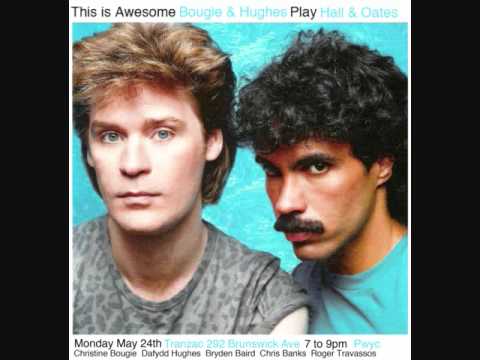
Sklar played bass on three albums by the Philadelphia duo: “Daryl Hall & John Oates,” “Beauty on a Backstreet” and “Bigger Than the Both of Us,” which produced this No. 1 single. “It was a really funny experience,” he says. This was because of KISS. According to Sklar, the blood-spitting rockers were working on a song in the neighboring studio, and they’d been there for about a week. “We spent the week there and cut the album, and when we left, KISS was still working on that same song,” he says. “Like, what the hell’s going on?” He adds that the recording process with Hall & Oates was always pleasant, natural and quick. “It’s really weird seeing that they’ve got some litigation going on; it always saddens me when I see something like that. It seemed so great when we were working together.”
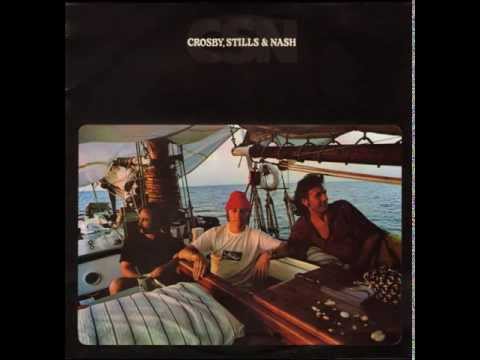
7. Crosby, Stills & Nash, “Just a Song Before I Go” (1977)
“This is such a special song because it’s the story of all of our lives,” Kunkel says. “We’re home for a little while and then you have to go back out on the road again.” He adds that Stills had an almost psychic understanding of guitar sounds and “always knew exactly what to do.” The drummer and Sklar spent years playing with the trio in different configurations and Kunkel says that work changed his career. “They were really great mentors.”
8. Linda Ronstadt, “Blue Bayou” (1977)
Wachtel says Asher’s approach with Ronstadt was for her to perform in the studio as if she was on stage. This decree also applied to the band. “That’s why he wanted us to go on the road with her, to get used to playing the songs live,” he says. “Her vocal on that [‘Blue Bayou’] is the live vocal we played to. I played acoustic guitar and the only overdubs on it were Don Henley and Kenny Edwards singing backgrounds.”
9. Warren Zevon, “Werewolves of London” (1978)
Wachtel and Zevon met while playing with the Everly Brothers in the early ’70s, and it was Phil Everly who inspired the song. Wachtel says he was visiting a friend, LeRoy Marinell, in London, when he received a call. “Warren said, ‘I can’t believe you’re there. I got a call from Phil and we have to write this song called ‘Werewolves of London,’ ’’ Wachtel recalls, adding that Everly had recently watched the English horror film of the same name. Lee Ho Fook in Chinatown was where Wachtel had eaten dinner, and he wrote the song’s first verse on the spot. “LeRoy had this guitar lick he’d been sitting on for about two years, the main lick you hear,” he says. “We tried it in a million songs and it had never worked before.” Wachtel says he also suggested the song’s memorable howl. Tracking it, however, wasn’t so easy. Wachtel and Browne, who co-produced the album “Excitable Boy,” tried more than 10 different studio drummers and bassists before deciding on Mick Fleetwood and John McVie, and they recorded around 60 takes. “It was like a movie,” Wachtel says, “making that simple song become the record it was.”
10. Stevie Nicks, “Edge of Seventeen” (1982)
Wachtel says Nicks made a demo with Kunkel’s drum part, but the guitar part — with its rapid-fire chugging — was being done with an echo. “I told [producer] Jimmy Iovine I’m not going to do that,” he explains. It turned into one of the most incredible moments of his career. “Stevie was on fire and she sang live through it. She may have redone some of the vocal, but what she sang was so inspiring,” he says. “Russ’s drums were magnificent, and I just kept chugging away.” Kunkel remembers Iovine’s thoughtfulness in the studio. “People think of Jimmy as this mogul, but what gets lost is he’s a great producer,” he says, adding that Iovine always stood on the floor in headphones to make sure the band was hearing the best mix. “He’d have the same physical feelings as we’d have as we’re playing a track. So he knew when it was good.”
Russ Kunkel and Carly Simon in 1985.
(Ron Galella/Ron Galella Collection via Getty)
11. Jackson Browne, “Somebody’s Baby” (1982)
Kortchmar says the highest-charting single of Browne’s career made him a bit uneasy at first. “He didn’t put it on his album [‘Lawyers in Love’] because he was afraid it was too pop and not Jackson Browne enough,” he explains. The song, which appeared in Cameron Crowe’s film “Fast Times at Ridgemont High,” was co-written by the pair. Kortchmar says he already had the lyrical hook, “must be somebody’s baby,” plus the changes and guitar hooks, when the director came knocking. “Jackson later realized it’s a terrific song,” the guitarist adds, “and now he plays it all the time at his shows.”
12. Don Henley, “All She Wants to Do Is Dance” (1984)
When Kortchmar was working with Henley in the ’80s, he says the Eagles’ drummer was hot for the newest gear. “We had one of the first Yamaha DX7s in the country,” he recalls. When writing the second single from the singer’s “Building the Perfect Beast,” Kortchmar used a sample from the synthesizer and ran it through distortion. “That’s the cement mixture sound you hear,” he explains. “The next morning, I woke up and wrote the lyrics in about 10 minutes.”
13. John Mayer, “Half of My Heart” (2009)
Mayer may be holding an acoustic guitar in the video for his Grammy-nominated single, whose original version features Taylor Swift, but he wasn’t the one who played it on the recording. “The producer Steve Jordan called me and said, ‘You’ve got to come play the acoustic part on this because it’s not settling in,’ ” Wachtel recalls, adding that he and the drummer Steve Jordan developed a “real lock between his high hat and my right hand strumming the acoustic guitar.”








.jpg)